

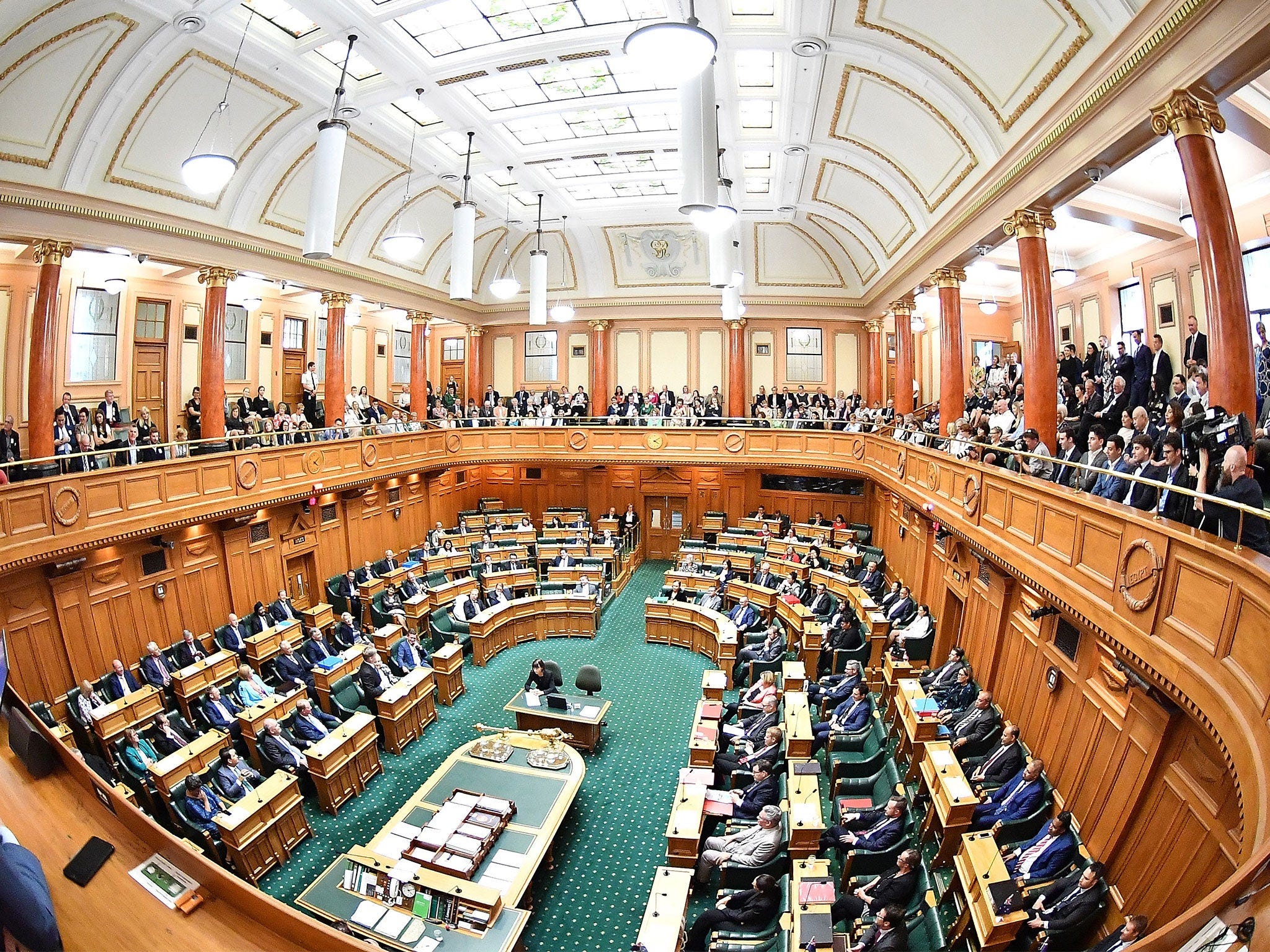
The number of MPs is too damn low
In his recent report on how to reform our mixed-member proportional (MMP) electoral system, my New Zealand Initiative colleague Nick Clark has appealed to the ‘cube root law,’ the tendency of national parliaments to have about as many members as the cube root of the country’s population. As Nick points out, New Zealand’s unicameral parliament is about 30% smaller than the cube root law would predict. He puts this into context with a table showing differences between lower house size and the cube root of the population in other OECD countries. I’ve displayed the same data in chart form below.
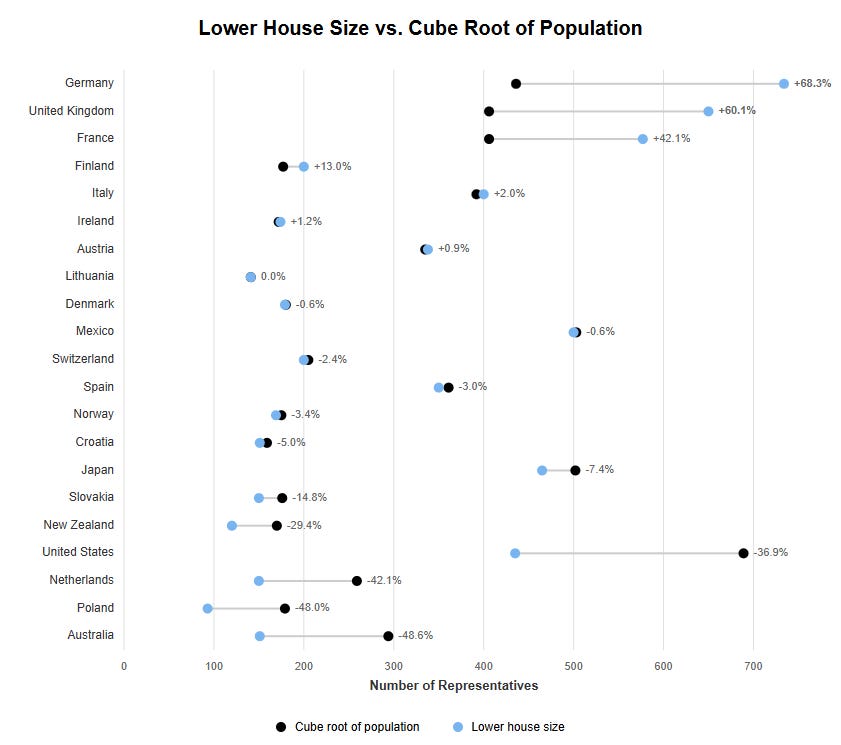
Not everyone thinks that the cube root law is the best approximation for the relationship between population and parliament size. But it’s long been used as a rule of thumb. And if we do rely on this common way of gauging whether our parliament is too big, too small, or just (about) right, it seems clear that the New Zealand Parliament is much too small.
In fact, New Zealand has the fifth biggest negative gap between the number of members its population would predict for its lower house (if we follow the cube root law), and the number of members its lower house actually has. If you find this tough to swallow, there is some consolation: the country whose parliament is most under-sized by this metric is Australia. (And that’s without even talking about countries like Germany and the UK, whose lower houses are substantially more over-sized than ours is under-sized.)
Of course, that New Zealand’s Parliament is relatively small doesn’t necessarily mean that it has to be bigger. The cube root law is a descriptive observation about the relationship that tends to hold between populations and parliaments; it’s not necessarily a prescription for the perfect number of seats in a lower house. (Although the Estonian political scientist Rein Taagepera’s original paper on the cube root law did advance some reasoning as to why this relationship might exist.)
Having said all that, since it would seem that our parliament is unusually small considering New Zealand’s now mighty population of five million, it would be nice to have some compelling reason why our lower house can’t be larger. After all, a larger house would mean more MPs, each of whom would be representing fewer Kiwis, thus making government more responsive to each individual voter and (arguably) making the country more democratic. Why not do it?
One reason is of course because it would cost more money. Personally, I think a more democratic New Zealand is something worth paying for, at least at the kind of cost we are talking about here. But we obviously don’t want to be throwing money away, least of all in these difficult economic times.
If there’s something that I can add to this discussion it is (as often) a slightly abstruse historical perspective. (Don’t worry, this piece is about New Zealand, not ancient Greek history, so I’ll only be taking us back about 175 years.) Because if we look at the size of New Zealand’s Parliament over the long run, I think we will be able to see not only that our parliament has been under-sized for quite some time, but also that this is in large part the result of a single, fateful decision to cut costs as long ago as 1890.
Parliamentary size: the big picture
The chart below shows the number of seats in New Zealand’s Parliament from its inauguration to the last election (the blue line), together with the cube root of its population over the same period (the norange line). Technically the blue line shows the number of members just in New Zealand’s lower house (the House of Representatives) until 1951, when the upper house (the Legislative Council) was abolished; thereafter it shows the number of parliamentarians tout court.
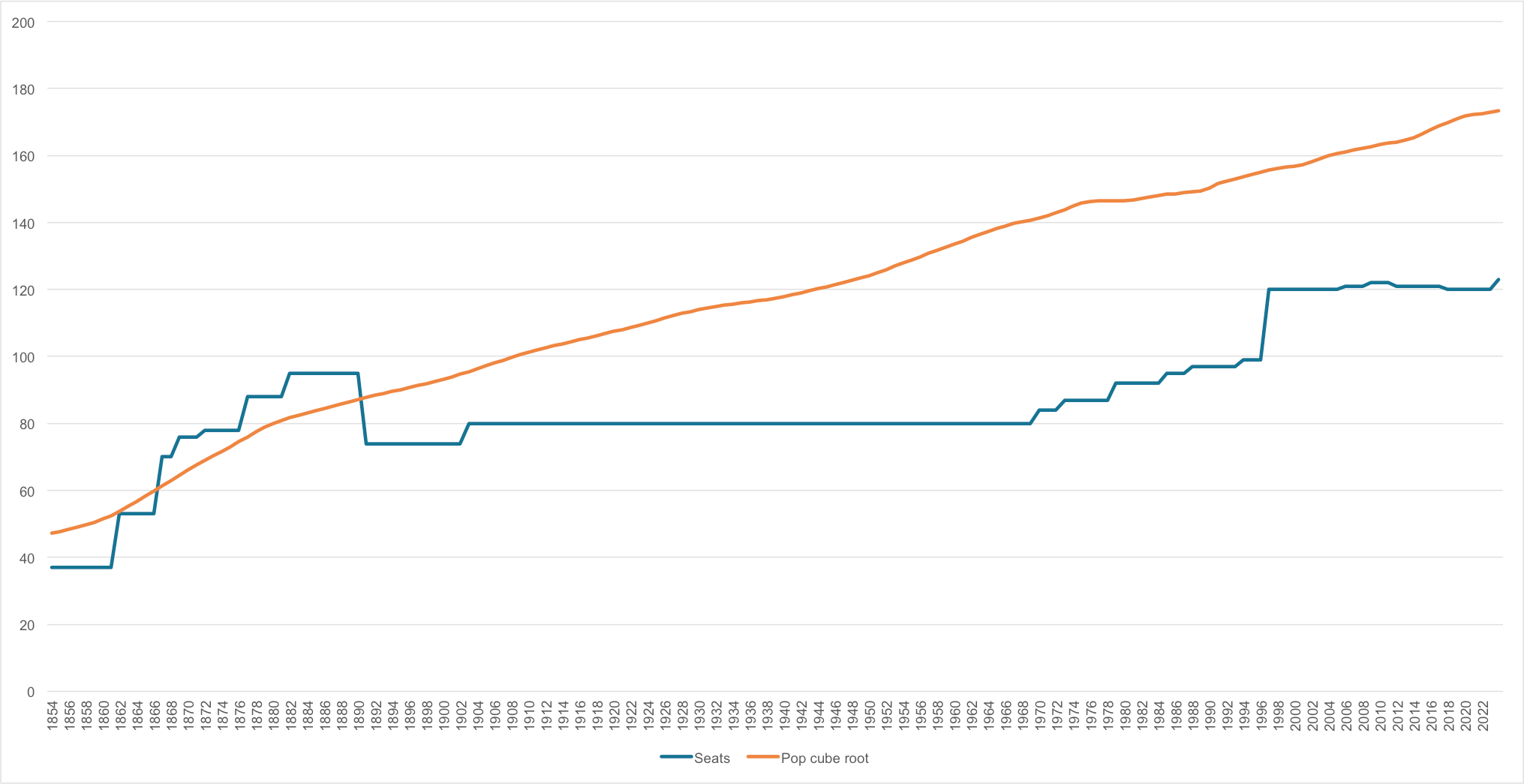
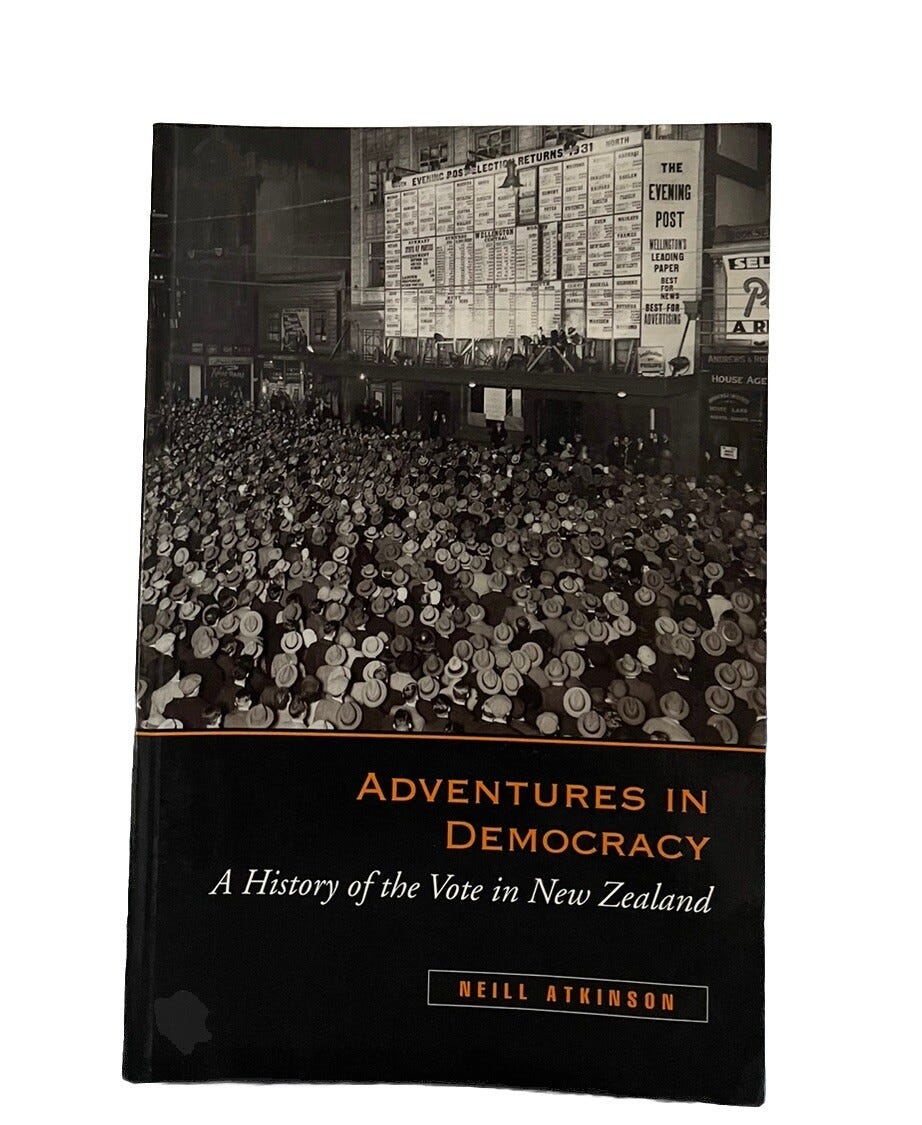
For population I used the New Zealand data from Gapminder, since it started slightly earlier, and ended slightly later, than a Stats NZ series that my colleague Bryce Wilkinson supplied me with; the two data series are otherwise virtually identical. For the number of representatives I used the list of general elections in Neill Atkinson’s Adventures in Democracy (2003), supplemented by online data for elections since that book was published. Wikipedia’s numbers seem to reflect changes to parliamentary numbers made by legislation, before they came into effect through elections. My series uses only numbers of members who actually took their seats in Parliament following general elections; in any case the two data series are again extremely similar.
What story does the chart tell us about the size of New Zealand’s parliament over time? Overall, I think the main story is very clear: except for a brief period between 1866 and 1890, when it was over-sized (compared to the cube-root of the country’s population), our parliament has been considerably and consistently under-sized. In fact, it has been significantly smaller than the cube root rule would predict for around 135 years now, despite some small moves in the right direction after 1969, and despite the considerable boost in MP numbers that came with the move to MMP in 1993.
But let’s take a closer look at the chart and see if we can find out more, especially if we combine it with the rich historical account of the development of New Zealand’s electoral system that’s available in Atkinson’s book.
I would argue that we can discern four main phases in our big story about the size of New Zealand’s parliament since its inception.
Phase 1 (1853-1889): The Heroic Age
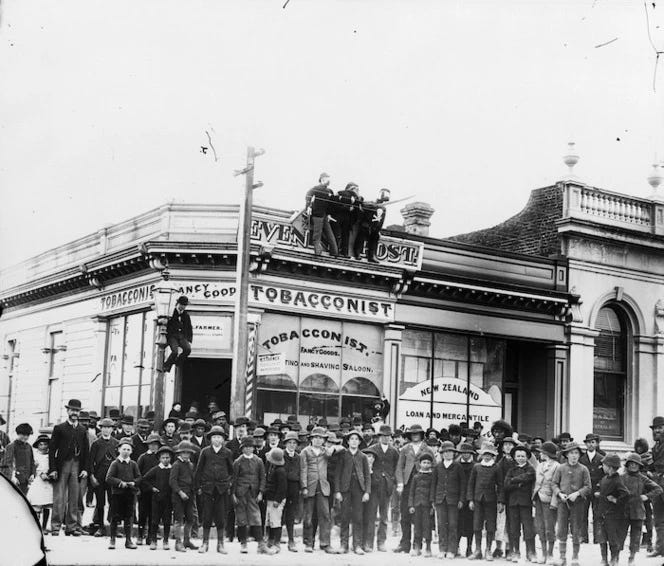
I call this ‘the heroic age’ because it’s the period in which New Zealand democracy was built. The country’s democracy was never perfect in this period (or any other), but it consolidated very quickly and even pushed the boundaries of democracy in a world-leading way, most famously by granting votes to women (the first nation to do so) in 1893. But this was in many ways the culmination of a decades-long process, ably covered by Atkinson, that involved a whole series of important democratic reforms, including the Electoral Districts Act (1858), the Representation Act (1975), and the Representation Act (1881).
As the names of these acts hint, one of the most important principles that bedded in during this period was ‘representation on the basis of population,’ to borrow the words of Sir John Hall (Prime Minister 1879-1882). It was mainly because of this principle that Parliament expanded, from only 37 seats at the beginning of this period to no fewer than 95 at the end of it. In 1865, for example, no fewer than fifteen members were added to ensure appropriate representation for the influx of gold-seeking settlers in Otago. The 1867 Maori Representation Act, which introduced separate electorates for Maori, added a further four members.
We should note, however, that new seats were added above and beyond the strict requirements of representation. As a result, for much of this period (from 1866 on), New Zealand’s lower house actually had more members than lower houses across the world have tended to have since. It’s not out of the question, I think, that this was also partly a result of the esteem in which democracy began to be held in this period, and of the radical momentum that was behind it.
Phase 2 (1890-1967): The Long 80s
You may associate ‘the 80s’ with big hair, big earrings, and the excellent music of acts such as The Bangles and David Hasselhoff. You may also associate it with decades such as the 1980s, 1880s etc. What I’m going to use the phrase to refer to here, instead, is the 67-year period between 1903 and 1970 when the number of seats in New Zealand’s Parliament remained stubbornly stuck at 80, without the gain or loss of a single seat.
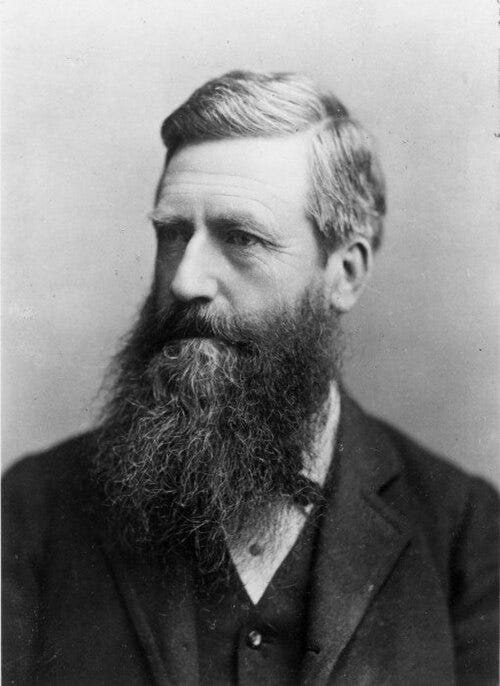
Admittedly, there were only 74 seats at the beginning of this period (from 1890 to 1902). That number was a result of the cutting of no fewer than 21 seats by the Representation Commission in 1890. The commission had taken this step at the behest of Sir Harry Atkinson (Prime Minister 1886-1887) following the 1887 election. With the colony now ‘mired in depression,’ as Neill Atkinson (no relation that I know of) puts it, the Prime Minister apparently felt that he had no choice but to reduce the size of Parliament ‘as a cost-cutting measure.’
Astonishingly, this one-off cost-cutting measure was to prove one of the most enduring and consequential decisions in New Zealand political history (at least as far as the very interesting topic of parliamentary size is concerned). When the Representation Act (1900) increased the number of seats to 80 in response to population growth, it marked the last time such a move was made until 1967. Why was there no increase in the number of representatives for almost seven decades, even as the population continued to increase in a roughly linear fashion?
It is hard to say. Reading Neill Atkinson’s book one is repeatedly struck by how difficult it has always been, even in my ‘heroic age,’ to get electoral reforms through Parliament, and without any very pressing need to increase the number of MPs, keeping up with population growth seems to have fallen by the wayside. Besides this, sitting MPs may have a tendency to be reluctant to dilute their own power by welcoming more colleagues. And budgetary constraints, in any case, have proven to be one of the great constants of democratic politics.
There was an attempt to entrench the number of seats in Parliament with the Electoral Act (1956), which set a super-majority threshold of 75% for any increases or reductions. A 1975 committee set up by Labour to look at changes to the Electoral Act did recommend an enormous increase to 121 MPs, but it was strongly opposed by National, who won the election later that year.
Whatever ultimately explains these strange doldrums that the New Zealand House of Representatives had sailed into, the situation made for a ‘long 80s’ of a persistence that even a Rick Astley fan wouldn’t wish for.
Phase 3 (1969-1995): Baby Steps in the Right Direction
Strikingly, but perhaps not surprisingly, when the long 80s finally ended in 1970, it wasn’t because of a conscious and concerted push for Parliament to expand at something more like the rate at which the population had continued to grow. At least, this wasn’t the direct cause for the small and incremental upward adjustments in parliamentary numbers that were made in this period.
As Atkinson explains, in order to put a stop to ‘the continued drift of seats from the South to the North Island’ on account of the North Island’s faster population growth, ‘the Electoral Amendment Act 1965 fixed the minimum number of South Island electorates at 25 and allowed the number of Northern seats to increase in proportion to population growth.’ ‘The inevitable result,’ Atkinson continues, ‘was the expansion of Parliament.’
This took place in hops rather than leaps: four more MPs in 1969, three more in 1972, and five more in 1978; then three more in 1984, two more in 1987, and another couple more in 1993. Or perhaps we should speak (since this is in my title for the period) of ‘baby steps’ - and baby steps in the right direction: towards a larger parliament, and one more in keeping with international practice.
As adorable as these infantile progressions may now seem in retrospect, though, they were clearly not going to bridge the gap between the size of New Zealand’s parliament and the lower houses of most of its international peers. And as far as the prospects of Parliament ceasing to be under-sized during the FPP era were concerned, they were very much too little, too late.
Phase 4 (1996-present): The MMP Freeze
In 1986, with the report by the Royal Commission on the Electoral System, we finally get a principled argument for a larger Parliament. The Royal Commission made the recommendation to increase the size of Parliament, its report stated, to make ‘parliamentary committees more effective, to enlarge the pool of ministerial talent, and to allow for an increase in the number of ministers.’ It also hoped that a bigger Parliament ‘could provide more independence in caucus and improve the quality of parliamentary debate.’ And it added that it supported ‘an increase in the number of MPs’ whether or not its main recommendation - the adoption of MMP - was taken up.
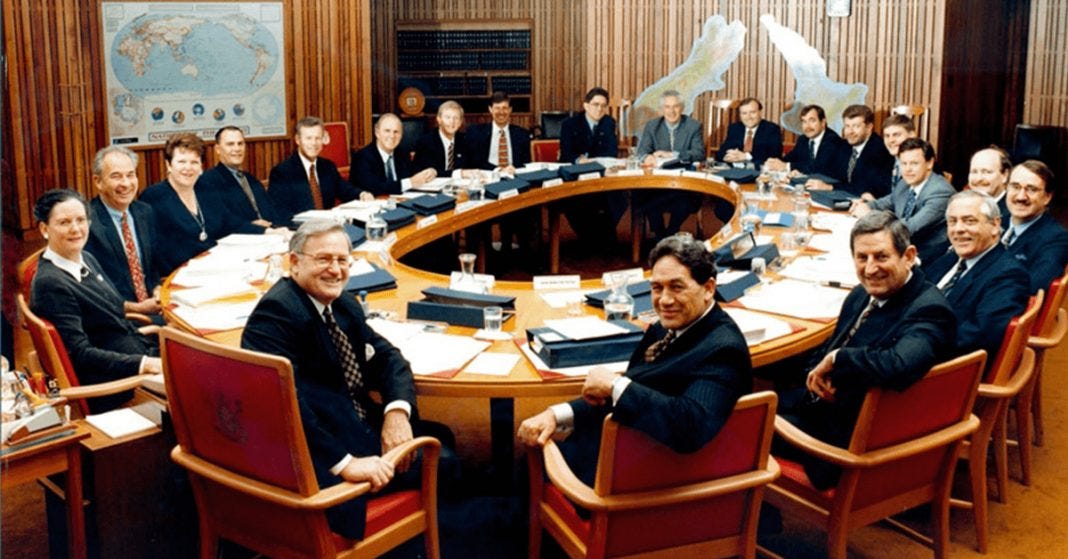
The commission suggested that 140 members (still a little less than the cube root of the population at the time) would have been ideal in terms of its concerns to increase the number of ministers and committees. Stating that it expected ‘some public resistance’ to such a large increase,' though, it eventually recommended a more modest increase, to 120. This was thus the number of seats that became part of the official scenario for a possible shift to MMP; and this was the number of seats that, after the referendum of 1993, became a reality at the 1996 election.
And an enduring reality, as it turned out. Because Parliament, for some reason, has remained at 120 seats since then. Except, of course, for a number of tiny fluctuations that you can just about see on the chart: to 121 in 2005, 122 to 2008, down again to 121 in 2011 and 120 in 2017, and, finally, right back up again to a record-breaking 123 at the last election (making the current Parliament - puny by international standards - the biggest Parliament New Zealand has ever seen).
But don’t be fooled: these minuscule fluctuations can be entirely accounted for by overhang seats - when a party wins a number of electorate seats that is in excess of what its proportion of the vote entitles it to. (As it happens, seven out of the eight overhang seats that have been won since MMP came into force have been won by the Maori Party, a side-effect of the Maori electorates, which the Maori party often wins without a substantial amount of support in the general population.)
New Zealand’s specific brand of MMP actually limits even the increases that come about because of overhang seats. This is because unlike in Germany (which also uses MMP), additional seats are not given to other parties to compensate them for the proportionality that has been lost by the existence of overhang seats. This arguably goes against the whole spirit of a proportional representation system. But it has kept Parliament closer to that 120 figure.
There has been, in any case, no principled or substantial increase in the number of MPs since MMP was introduced - thirty years now. In fact, there has barely been any concerted attempt to increase the size of Parliament, and one of the only high-profile recommendations for a larger parliament - put forward by the 2023 report of the Independent Electoral Review - was rejected by the current government. All of which brings us back to the whole question of whether we should try to increase the size of Parliament in the near future, as Nick Clark has now recommended.
The path to a puny parliament
This piece isn’t a comprehensive overview of the debate about parliamentary size in New Zealand, or even a stab at my own fully-fledged argument for a bigger parliament. There are plenty of arguments in favour of adding some seats to Parliament that I haven’t even touched on (including the prediction that what finally led to seats being added from 1969 - the North Island’s population growth, combined with the South Island needing a certain minimum number of seats - will inevitably lead to more seats being added again the near future.) There are also plenty of arguments against adding more seats that I haven’t canvassed, not least the libertarian concern that we should not unduly add to the size of the state.
What I hope I have done in this piece is two things. First, I hope I have shown that, if we accept the cube root law as a good rule of thumb for how big parliaments tend to be internationally, the New Zealand Parliament has been undersized for about 135 years. And secondly, I hope that by diving a little deeper into the historical details of the painfully slow growth of the New Zealand Parliament, it has become clear that 120 is not a number of MPs we have arrived at out of principle, rational design, or any sense of international best practice.
Political scientists like to talk about ‘path dependence’ - the phenomenon by which decisions made at one point in time can have incredible staying power, shaping the way things are long after the original justification for those decisions has been forgotten. We might think of the QWERTY keyboard, designed to slow down typing so that typewriters wouldn’t jam, but which has remained a key feature of our modern keyboards (which don’t tend to jam).
If I’ve got the details of my historical story correct, Harry Atkinson’s decision to reduce the size of Parliament - a Parliament which had been growing steadily since then - in order to cut costs in response to an economic downturn in the 1880s, may be a good Kiwi example of path dependence. Sure, there were (as we have seen) likely other reasons that have long militated against the expansion of Parliament. But the long doldrums of ‘the 80s’ seem to have set a sort of cultural expectation for parliaments that are much smaller than those of similarly-sized nations.
It isn’t clear (to me at least) why Atkinson was able to cut Parliament so decisively in 1890 when other schemes to change the number of representatives before and after his time failed. In the long view, though, the fact that he did - and that New Zealand has for generations now thought of its unusually small parliaments as about the right size - now seems like not too much more than a historical accident.
Interesting chart, that. How come Netherlands, with a far smaller ratio, apparently has better governance (World Bank Governance Indicators - in all but corruption, perhaps)? How would having more representatives help, given that they don't listen, anyhow?
A further matter to consider when comparing Parliaments and the number of members of Parliament in other places is to also consider bicameralism and federalism. New Zealand has 122 elected MPs. Australia has MHRs and it has senators, and it has State Legislators as well, and it some states, also state senators. Counting only the States and the Commonwealth Parliament, the work that is done by 122 New Zealand MPs is done by 705 elected politicians in Australia.