
In April 2010, in the dying days of his premiership, Gordon Brown passed the Equality Act, which he had promised to implement in Labour’s 2005 election manifesto. Brown’s bill consolidated a number of previous pieces of legislation - from the 1970 Equal Pay Act to the 2006 Equality Act - into a single statute. The new law promised to comprehensively protect Britons again discrimination on the grounds of race, sex, sexual orientation, disability, age and religious or non-religious conviction, all within a single, coherent framework.
Supporters of the act would say that it has delivered on that promise, and in an era when legal protections from discrimination are still - and perhaps ever more - needed. And there is no doubt that the act was honourable in its intentions. It can be seen as the legal expression of a long-awaited and overwhelmingly positive shift in British values from the 60s to today. It can also be seen as the most recent expression of a long and noble British tradition of political and legal egalitarianism, one of the traditions that has helped make Britain (not to mention its Commonwealth offshoots) a beacon of fairness and democracy.
The problem
The main problem is that the act has also proven to be a serious and ongoing threat to time-honoured freedoms, especially the freedom of speech. In recent years, think-tanker Maya Forstater and doctor David Mackereth were both dismissed from their jobs for their gender-critical views - views which employment tribunals initially found were not protected by the Equality Act as it is currently formulated.
The act is also over-zealous. Under it, employers can be liable for discrimination even in the absence of any intention to discriminate. Public sector organisations are required to actively ‘advance equality of opportunity’ under the ‘public sector equality duty.’ And even private sector employers are required to carry out costly and time-consuming reporting of any differences in pay between male and female employees.
This brings us to the burdens that the act imposes on businesses, the engine of the any economy. According to a report published this year by Policy Exchange, the UK has 60% more workers in HR than the US. Some amount of this is almost certainly a consequence - whether intended or not - of the Equality Act.
Reform, or reform?
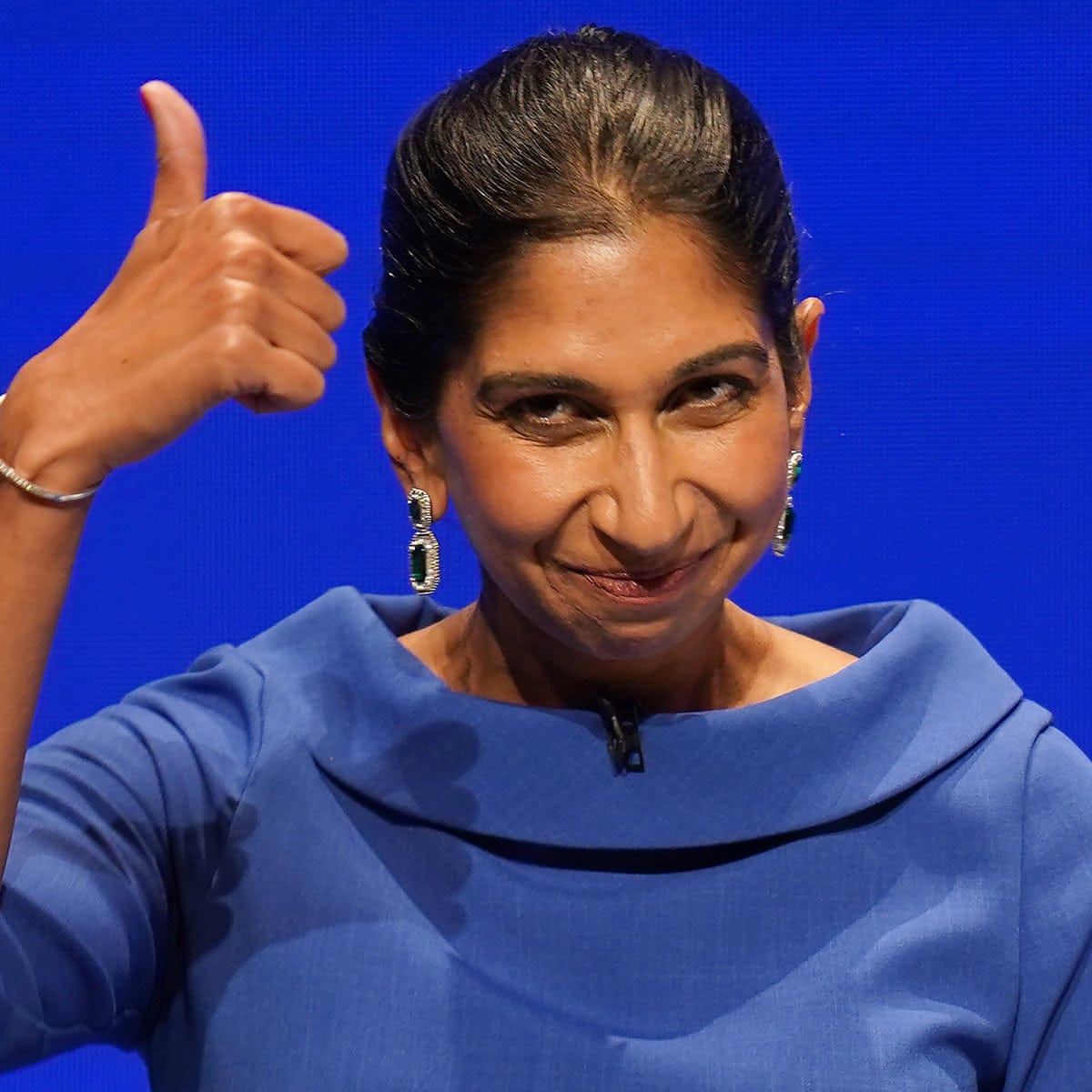
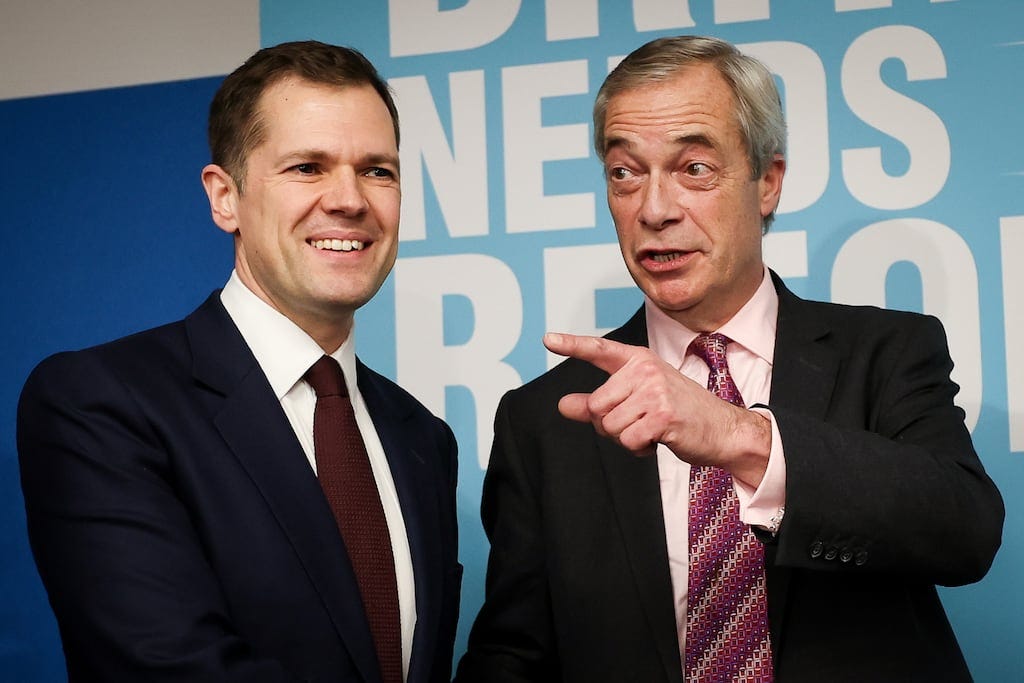
In mid-February this year, at the unveiling of Reform’s frontbench team, Suella Braverman announced that a Reform government would repeal the Equality Act. At the same event, Robert Jenrick echoed her comments, calling aspects of the act ‘not sensible.’
But both of these senior Reformers also wanted to keep some of the protections in the act. Braverman apparently made clear that ‘she did not want to get rid of all employment protections’, while Jenrick reassured a journalist that ‘we want to see’ important workplace rights ‘protected and handed on to future generations.’
Doing away with the Equality Act and all of its constituent parts completely would constitute a watershed moment for British society. As the Trades Union Congress pointed out soon after Braverman’s announcement, it would effectively make it legal for an employer not to hire you solely because of your sex. Or for a university to turn you away because of your sexual orientation. Or for a pub to refuse you service because of your ethnicity.
In many ways, the series of statutes and regulations that were consolidated in the 2010 Equality Act was Britain’s gradualist answer to the US’s 1964 Civil Rights Act, which incorporated most of the changes that had been demanded by the civil rights movement into one enormous bill.

Do we really want to go back to the pre-civil rights era in Britain?
There is a libertarian argument, of course, that businesses should be able to hire, fire, and serve whoever they want, and for whatever reason. And those who want to repeal the Equality Act completely probably suspect that there wouldn’t be many retailers in today’s Britain (in contrast to 1950s Britain) who would be looking to turn away paying customers because of their skin colour or sexuality.
Most critics of the act, though, aren’t motivated by a burning desire to restore to shopkeepers a right to be racist. What they tend to complain about, rather, is the act’s occasional over-zealousness. This includes Suella Braverman, who is keen to get rid of the ‘pernicious, divisive notion of protected characteristics,’ and Robert Jenrick, whose main complaint about the act seems to be the ‘public sector equality duty’ that it imposes.
Repealing the act completely and replacing it with something different, then, might itself not be very sensible. Easier, and probably better, would be simply to amend the existing act in ways that do away with its more over-zealous aspects while leaving the core anti-discrimination law in force.
Braverman and Jenrick’s complaints
In response to Braverman’s complaints about the ‘notion of protected characteristics,’ my understanding is that the characteristics listed in the 2010 Equality Act are ‘protected’ only by the act itself, not in any more general or metaphysical sense. They are ‘protected’ only in the sense that it’s illegal to discriminate against anyone on the basis of these characteristics (race, sex, etc.)
Strictly, it’s citizens that are being protected from discrimination on the basis of these characteristics. It’s not the characteristics themselves that need protecting. If this is confusing, it might be worth replacing the term, perhaps with more neutral references to ‘the listed’ or ‘enumerated’ characteristics.’
When Robert Jenrick criticizes the public sector equality duty imposed in Section 149, he tends to tell a story about recent internships at GCHQ and the Bank of England that were only open to ethnic minorities, thus excluding working-class white youths in his constituency.
As critics of Jenrick have pointed out, the 2010 Equality Act itself includes a provision barring ‘positive discrimination,’ or preferring a candidate for a job solely because of their race or sex (or any other of the characteristics enumerated in the act). The only exception is in a genuine tie between two candidates, when an employer can use a candidate’s race or sex (vel sim.) as a tie-breaker - if and only if they can also prove that the candidates were equal in every other way and that the relevant characteristic is under-represented in their workforce.
Jenrick is right, though, that the 2010 Equality Act also includes provisions that not only allow, but require public organizations to take measures that stop just short of the boundaries of positive discrimination - and that sometimes arguably stray beyond them.

The public sector equality duty
If you haven’t yet had a look at Section 149 of the Equality Act (and I will forgive you if you haven’t), it’s worth just skimming it to get a sense of quite how far it goes. This part of the act doesn’t just bar public bodies from discriminating against people; it imposes a whole series of duties on them. Are these duties at least well-grounded, proportionate, and reasonably easy to fulfil?
No they are not. Public organizations, under this section of the act, have to have ‘due regard to the need’ to ‘eliminate discrimination, harassment, victimisation and any other conduct’ that the act prohibits; to ‘foster good relations between persons who share a relevant protected characteristic and persons who do not share it’ and to ‘advance equality of opportunity between persons who share a relevant protected characteristic and persons who do not share it.’
Having ‘due regard’ to that last ‘need’ also imposes further obligations on organizations to ‘remove or minimise disadvantages suffered by persons who share a relevant protected characteristic that are connected to that characteristic,’ to ‘take steps to meet the needs of persons who share a relevant protected characteristic that are different from the needs of persons who do not share it’; and ‘to encourage persons who share a relevant protected characteristic to participate in public life or in any other activity in which participation by such persons is disproportionately low.’
It’s that last clause that can push organizations to the brink of ‘positive discrimination.’ Together, that is, with Section 158, which seems designed to reassure organizations that, though they cannot engage in ‘positive discrimination,’ there is nothing wrong with ‘enabling or encouraging’ people with perceived disadvantage to overcome that disadvantage or to 'participate’ more.
That might seem innocuous, but the government’s explanatory notes to the act and subsequent legal judgments have established that ‘enabling or encouraging’ more ‘participation’ for groups thought to be under-represented is consistent with training programmes that target particular groups - and that exclude other groups. And that apparently includes internships. Which brings us back to Jenrick’s white working class youths who were excluded from an internship programme - lawfully, it would seem, thanks, as he says, to the Equality Act.

Even besides the way it seems tailor-made to bring public bodies to the brink of ‘affirmative action,’ as well as the fillip it has doubtless given to HR departments, the public sector equality duty simply goes too far.
Public bodies are busy places - and when they are not, they should be. They are supposed to be using a minimum amount of taxpayers’ money to deliver quality healthcare, or safer neighbourhoods, or secure borders. Why should we be giving them the additional burden of ‘fostering good relations’ among staff of different ethnicities?
Of course, staff of different ethnicities (or sexes, or sexualities) need to get on to the point that they can do their work effectively. (We will leave aside here the apparent assumption that people of different ethnicities won’t be able to get on to that extent in 21st century London.) Beyond that, though, why should we care how well everyone is getting on? These are supposed to be workplaces, not dinner parties. In any case, it is one thing to ban fights in the pub, another thing entirely to give publicans an obligation to make sure everyone is getting on swimmingly.

There is a kind of grim, fixed-grin, Are We Having Fun Yet? totalitarianism here. As often with totalitarianism, it goes hand in hand with a vague, adolescent utopianism. Public organizations, in case you missed this, have an obligation to have at least ‘due regard’ to the ‘need’ to eliminate all forms of oppression (‘discrimination, harassment, victimisation’ etc.) in their midst.
To eliminate something (just to be clear) means to annihilate it, to reduce it to zero. Mere decimation won’t do. This presumably means that even one not particular significant episode of discrimination must be taken as a cue for more reflection, more effort, and more compulsory workshops - all at the taxpayer’s expense.
There are plenty of things in the Equality Act that we will want to preserve. There are also surgical changes to particular sections that will need to be made (more on some of those below). But it is very hard to see how the meddlesome, burdensome, and staggeringly impractical obligations imposed by the public sector equality duty can possibly be saved. It needs to be repealed in toto.

Unworthy of respect?
In September 2018, Maya Forstater, a tax expert, made a series of posts on Twitter expressing her view that biological sex is immutable. By December of 2018, the Center for Global Development, a think tank, had decided not to renew Forstater’s contract. When Forstater challenged her dismissal at an employment tribunal on the grounds that her (non-religious) beliefs about sex were protected under the Equality Act, the judge (one James Tayler) found against her, upholding her dismissal.
In June 2018, David Mackereth, an experienced doctor, lost his position as a disability claims assessor for the Department of Work and Pensions after refusing to use trans patients’ preferred pronouns. When he challenged the decision at an employment tribunal on the grounds that his (partly religious, partly scientific) beliefs about sex were protected under the Equality Act, the judge found against him too, upholding his dismissal.
Admittedly, the decision in Forstater’s case was eventually overturned by the Employment Appeal Tribunal (EAT) in June 2021, and she was eventually awarded £106,400 in compensation. And the EAT did eventually overturn the finding that David Mackereth’s views were not protected by the Equality Act, although it also upheld his dismissal on the grounds that while he had a right to hold gender-critical beliefs, he did not have the right to manifest them in the precise context that he did. (The distinction between holding and manifesting a view comes entirely from the European Convention on Human Rights, whose effect on free speech law in the UK deserves a whole separate post on its own.)
All the same, both Forstater and Mackereth lost their positions for expressing their views. And both were told, by the tribunals that considered their initial challenges to their dismissals, that their views were ‘incompatible with human dignity’ and ‘unworthy of respect in a democratic society.’ Views which are held by the majority of Britons.

How did we get here?
We got here because of the vague way that the 2010 Equality Act defines ‘belief’ - and because of the way the European Convention on Human Rights (ECHR) was brought in to help make the definition tighter.
In fact, Section 10 of the Equality Act doesn’t so much define ‘belief’ vaguely as decline to define it at all. ‘Belief,’ it states, unhelpfully, ‘means any religious or philosophical belief.’ But that seems impracticably broad.
It was a specific case - Grainger plc v Nicholson - that was decided the same year as the Equality Act was passed (2010) that tightened the definition. In his judgment, Mr. Justice Burton introduced five criteria (‘the Grainger criteria’) for a belief to be protected:
The belief must be genuinely held.
It must be a belief, not [simply] an opinion or viewpoint based on the present state of information available.
It must be a belief as to a weighty and substantial aspect of human life and behaviour.
It must attain a certain level of cogency, seriousness, cohesion, and importance.
It must be worthy of respect in a democratic society, not be incompatible with human dignity and not conflict with the fundamental rights of others.
It was that fifth criterion which was used to deny Forstater and Mackereth’s gender-critical views of the protection of the Equality Act in the initial employment tribunal rulings.
Protecting free speech
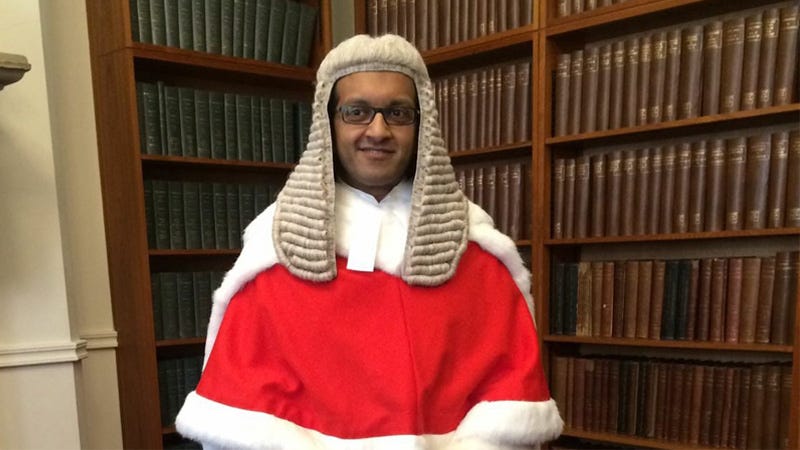
Happily for free speech, Mr. Justice Choudhury at the EAT eventually found (in his decision on the Forstater case) that beliefs should be protected unless they amount to ‘totalitarianism,’ including Nazism, or to ‘espousing violence and hatred in its gravest forms.’ He stated clearly that free speech protections must apply even to views that may be ‘offensive, shocking or even disturbing to others.’ And he later reiterated that beliefs which ‘may well be profoundly offensive and even distressing to many others…must be tolerated in a pluralist society.’
For some, the precedent set by Choudhury in his ruling will be enough to protect controversial views in the future. The language of the Equality Act, though, is still so vague that employers are likely to carry on dismissing employees whose views they dislike. Workers who have been discarded for their views may well be able challenge such decisions in the courts, but legal challenges can take their toll in terms of time and money.
Rather than relying on the Forstater precedent, it would therefore be better (as has previously been suggested) to insert clearer protections for free speech in the Equality Act. This would also be desirable in that the act as it stands includes very little mention of free speech. As ancient Greek terms like isegoria remind us, though, free speech is also equal speech. My right to speak my mind whatever more powerful individuals may think is an expression of my equality as a citizen as much as it is an expression of my freedom.
The best way to emend this deficiency in the act would be to insert a new section which would explicitly bar employers from dismissing workers on the basis of lawful expression. This ‘expression’ could be defined to encompass all ‘manifestations’ of beliefs in both speech and action that stop short either of direct incitement to violence or of harassment. The new section could also bar employees from restricting workers’ lawful expression outside of working hours in employment contracts or codes of conduct.
Should equal labour equal equal pay?
One of the ‘important pieces of legislation’ that Robert Jenrick has described as protecting workplace rights (rights that he wants to ensure are ‘handed on to future generations’) is the 1970 Equal Pay Act, now of course part of the omnibus Equality Act.
The 1970 Equal Pay Act can’t be blamed for everything that’s in the Equality Act. A lot of that was forced on the UK in 1982 by another EU body, the European Court of Justice. But I think it’s arguable that the equal pay legislation as it stands is one of the more misconceived and burdensome parts of the act - one that will have to be substantially restricted if not wholly excised.
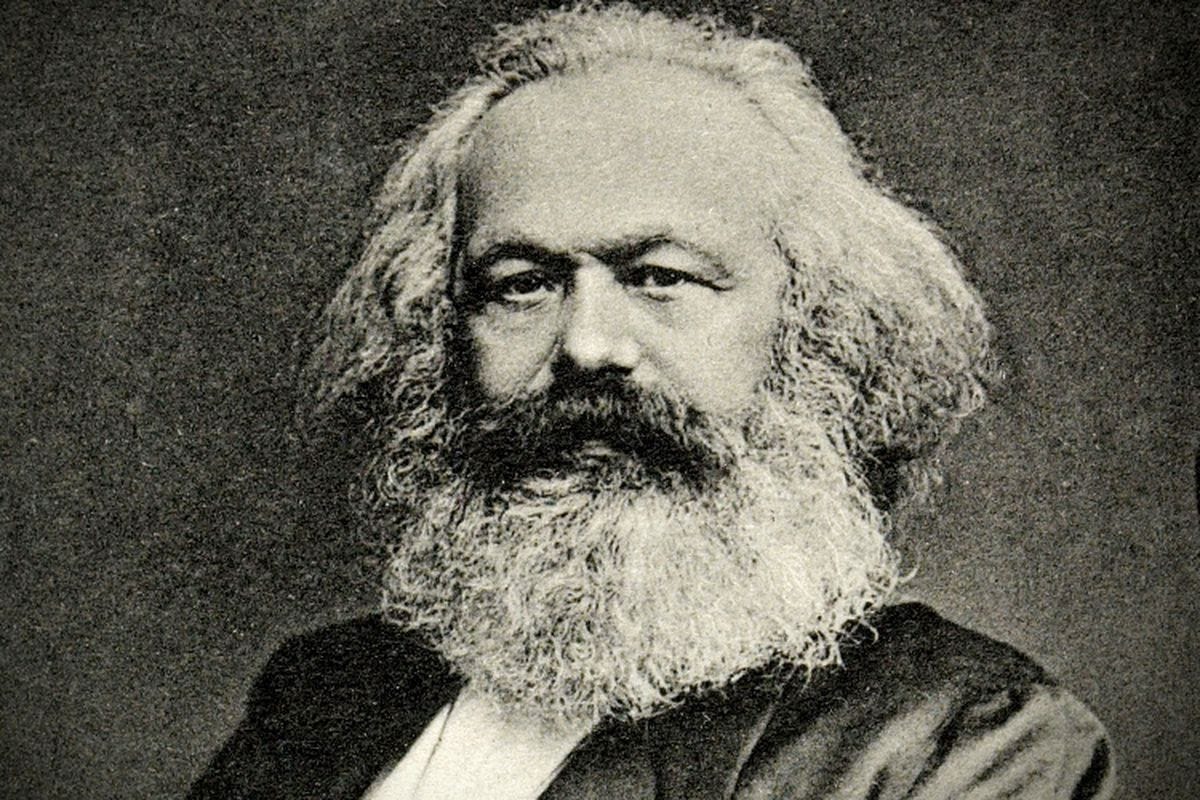
The problem with ‘equal pay’ legislation of this sort is that it revives an old Marxist theory that economist and social scientists have largely left behind. This theory, the ‘Labour theory of value,’ holds that work is or should be priced according to the time and effort that people put into it.
This sounds nice, and we might well want to reward the time and effort of people we know in non-monetary ways (by praising them, for example, or giving them a present). But it isn’t the way that prices work. Prices reflect supply and demand.
Of course, there have been many points in history when people have decided that they don’t like the prices assigned by the markets, and want to set their own prices. This has usually had negative, if not disastrous, results. This is partly because it’s more difficult than you might think to force people to pay prices they don’t want to pay, and partly because even setting the ‘right’ price usually involves establishing some committee drawn from a self-proclaimed moral and technical elite to tell everyone what the prices should be.
This brings us back to the 2010 Equality Act, which speaks explicitly of work ‘of equal value.’ That idea can actually be traced back to the founding charter of the European Economic Community, the 1957 Treaty of Rome, which demanded ‘equal pay for equal work’ - a demand which led the European Court of Justice to intervene in UK equality law in 1982.
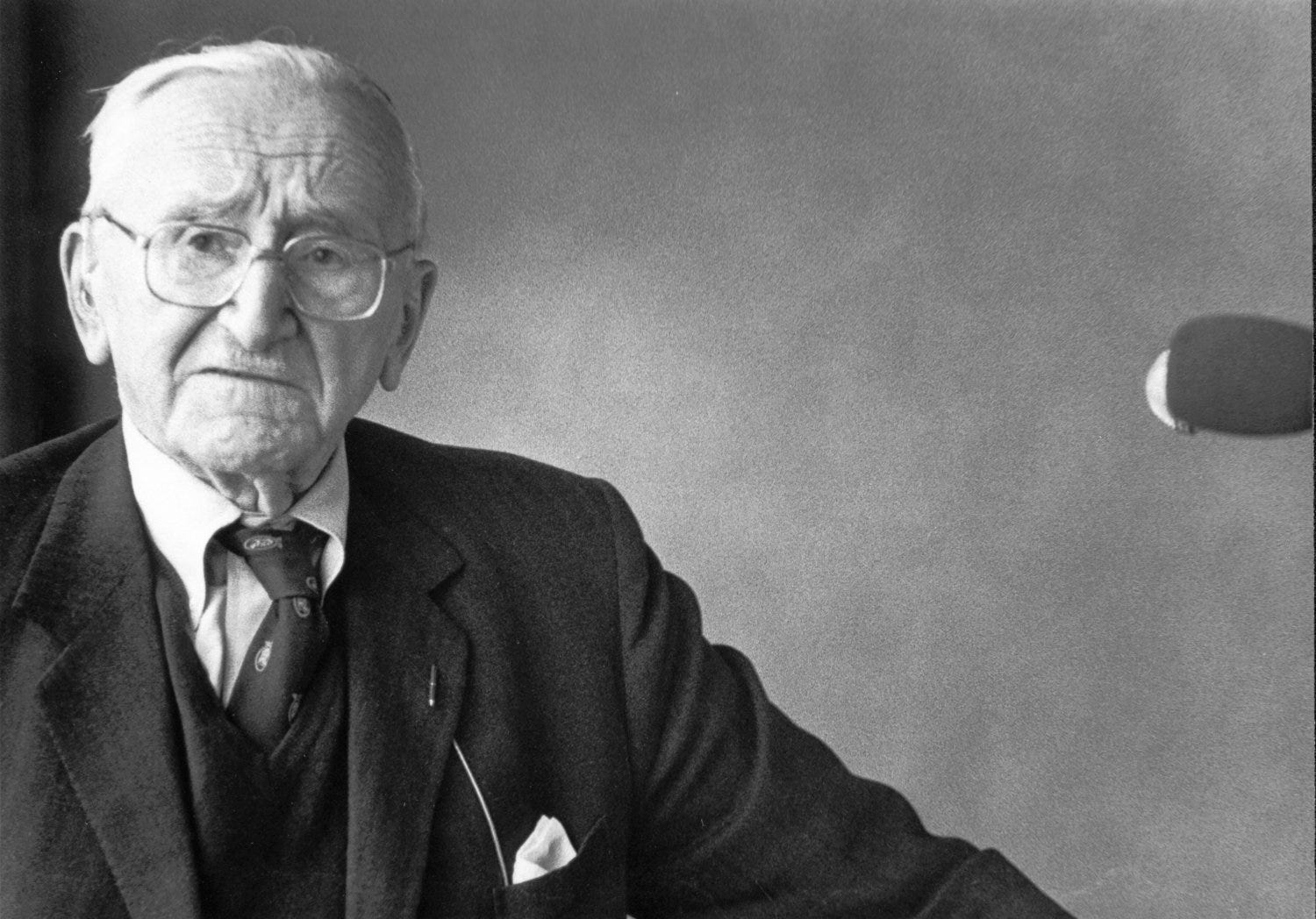
Obviously (as a Nobel-winning economist pointed out long ago) if work is genuinely of equal value - that is, if everyone, not just technocrats, value it as such - then it should command an equal price, and no intervention is necessary. If work of equal value somehow remains significantly less remunerated - as women’s work is often said to be - than you’d expect companies to want to hire a workforce consisting exclusively of women. Because, of course, the same output at less expense is a pretty unbeatable business proposition.
That the current equal pay legislation depends on a labour theory of value seems to be confirmed by how it is currently implemented. This involves costly and time-consuming job evaluation schemes, which tend to look at things like the skills required by a position, the responsibility it involves, and also the effort it requires.
Many of these sound like a reasonable way to evaluate a job, but people aren’t perfect when it comes to guessing how much others will value work of particular sorts - and by ‘others’ I mean both potential customers and potential employees.

In 2024, for example, a tribunal decided that the high street clothing chain Next had underpaid its mostly female retail workers compared to its mostly male warehouse workers. That’s despite the fact that the company had offered retail staff a chance to transfer into warehouse roles with very little take-up. One woman even admitted that she wasn’t willing to do a dustier, more physical, and less ‘people-facing’ warehouse job without higher pay. All of which suggests that the warehouse workers’ work was better remunerated for a reason - because fewer people were willing to do it.
As this example reminds us, one of the more bizarre features of the current pay equity regime is that it often involves comparisons having to be made between very different jobs. This was not so much a feature of the 1970 Equal Pay Act, which focused on ‘like’ positions - the same, or very similar, jobs.
Section 65 of the Equality Act preserves some of the ‘like’ language (in clause 2), and perhaps that can stay. The ‘equal value’ elements in Section 65 (which encourage comparisons between unlike jobs) should be repealed, though. So should Section 78, which requires employers to carry out costly and time-consuming reporting of any differences in pay between male and female employees.
![DVIDS - Images - A Camp Pendleton dual-military couple's story on their commitment to each other and the Corps [Image 2 of 3]](https://substackcdn.com/image/fetch/$s_!ofjT!,f_auto,q_auto:good,fl_progressive:steep/https%3A%2F%2Fsubstack-post-media.s3.amazonaws.com%2Fpublic%2Fimages%2F10ae9cfd-0a9a-4fb5-a227-1a27dc6bf9b3_1000x667.jpeg "DVIDS - Images - A Camp Pendleton dual-military couple's story on their commitment to each other and the Corps [Image 2 of 3]")
Reform, not repeal
There are a few other things that may need changing. Section 13, for example, currently makes organizations liable to discrimination even when they don’t have any intention to discriminate. This erodes a key principle of natural justice, that we shouldn’t punish individuals without some evidence of mens rea - the ‘guilty mind’ constituted by an intention to do wrong. As Paul Yowell has argued, Section 13.1 could be supplemented with sub-clauses that make clear that A discriminates against B because of a protected characteristic only if A consciously intends to do so.
Others might want to suggest other changes in the comments. But this essay is probably more than long enough already.
Since I have been quite critical of certain section of the 2010 Equality Act, I should reiterate in closing that there are plenty of good things in it - things we will want to keep in order to lessen the risk of reverting to a pre-civil rights era of unrestrained prejudice. The liberal core of the legislation should stay in force, including the list of characteristics that should not be used to discriminate (Section 4); the ban on not serving people because of any of these characteristics (Section 29); and the protection against discrimination in hiring and employment (Section 39).
I should also reiterate that there is nothing intrinsically wrong with equality legislation, or with this equality legislation. On the contrary: equality is one of the fundamental values of both democracy and liberalism, and one of the grand traditions and motivating ideals in British and broader Anglosphere politics.
That much was already clear in the great series of equality acts that has helped make our societies more equal and more free for everyone since the 1950s. It made perfect sense for Gordon Brown to want to consolidate these acts into a single piece of legislation, and it was fitting that Brown, who embodies much that is admirable in the British egalitarian tradition, was the one to do it.
But the act as it currently exists goes too far. It has done damage to another of the fundamental values of our liberal democracies: freedom (and especially the freedom of speech). It oversteps the bounds of appropriate regulation, requiring organisations to attempt to bring into being a vague and utopian vision. And it imposes a severe and continuing burden on public organizations and private businesses alike.
It therefore does need to be reformed. And I think the changes I’ve suggested here (as well as similar changes suggested by others) should be enough to keep a reform-minded (if not necessarily a Reform-led) government productively busy.