Against Smiling
The tide of inanity must be turned back

I think it was the last time I got off a plane (though it could have been at the end of virtually any commercial transaction these days). Everyone was filing down through the aisles, and performing their last, ritual social duty as they reached the stewards and stewardesses that stood there like a kind of reverse welcome-party. ‘Thank you,’ ‘cheers’ - these were the ritual tokens that we all had to hand in before leaving. And I didn’t begrudge that. Bit I also felt an extra pressure. The pressure to do the ritual properly, like a truly good soul would do. The pressure to smile.
I can’t remember when I was first told to smile, but I can bet it was pretty early on - probably the first time I ever had a picture taken of me. I’m sure that wasn’t atypical. After all, even babies are not exempt from requests for smiles. Especially not babies. It makes sense. They need to be prepared, after all, for the pressure to smile that will be with them for the rest of their lives.
We now live in a relentlessly smiley culture. We are praised for turning smiles upside down, for putting a smile on everyone’s faces, for responding to everything with a smile. Even our work can now be given a stranger’s imprimatur in the form of an eerily perma-glad smiley face.
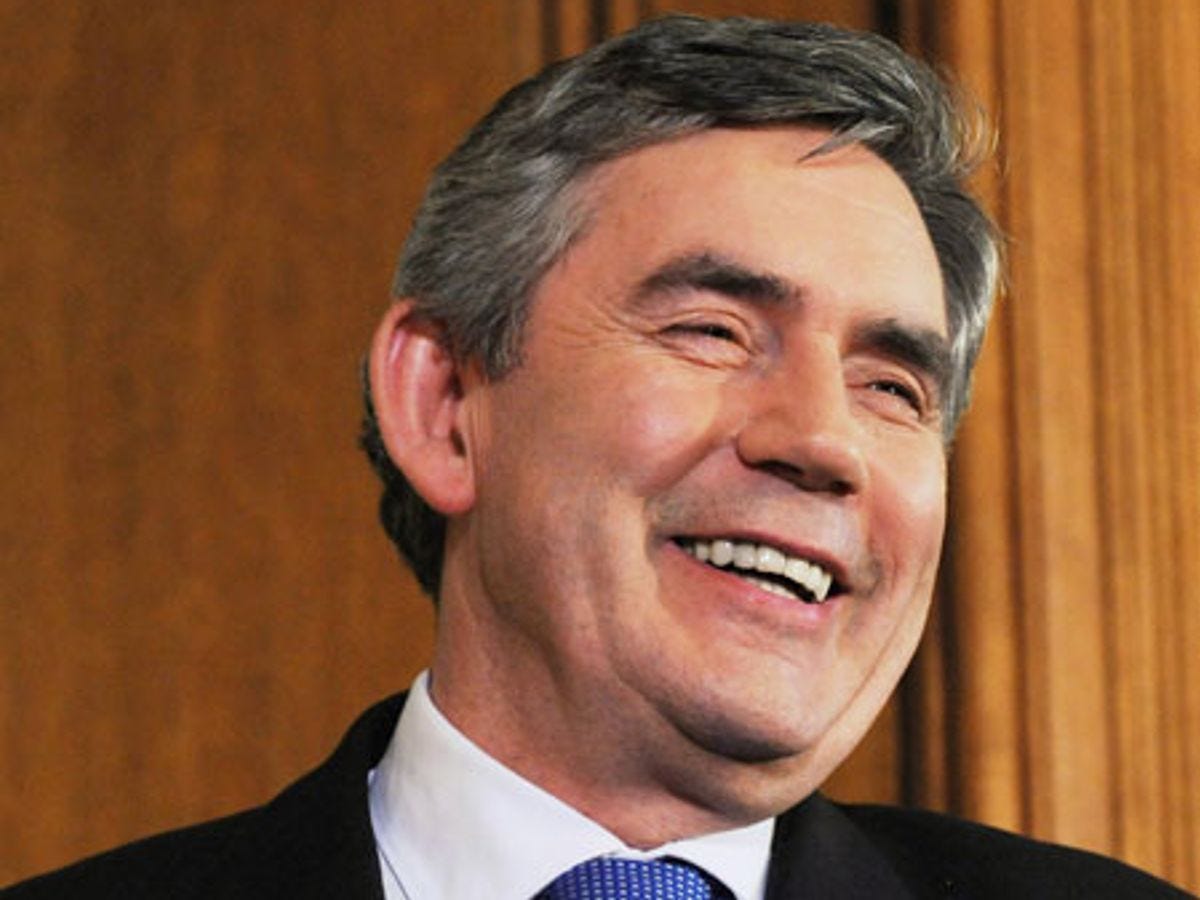
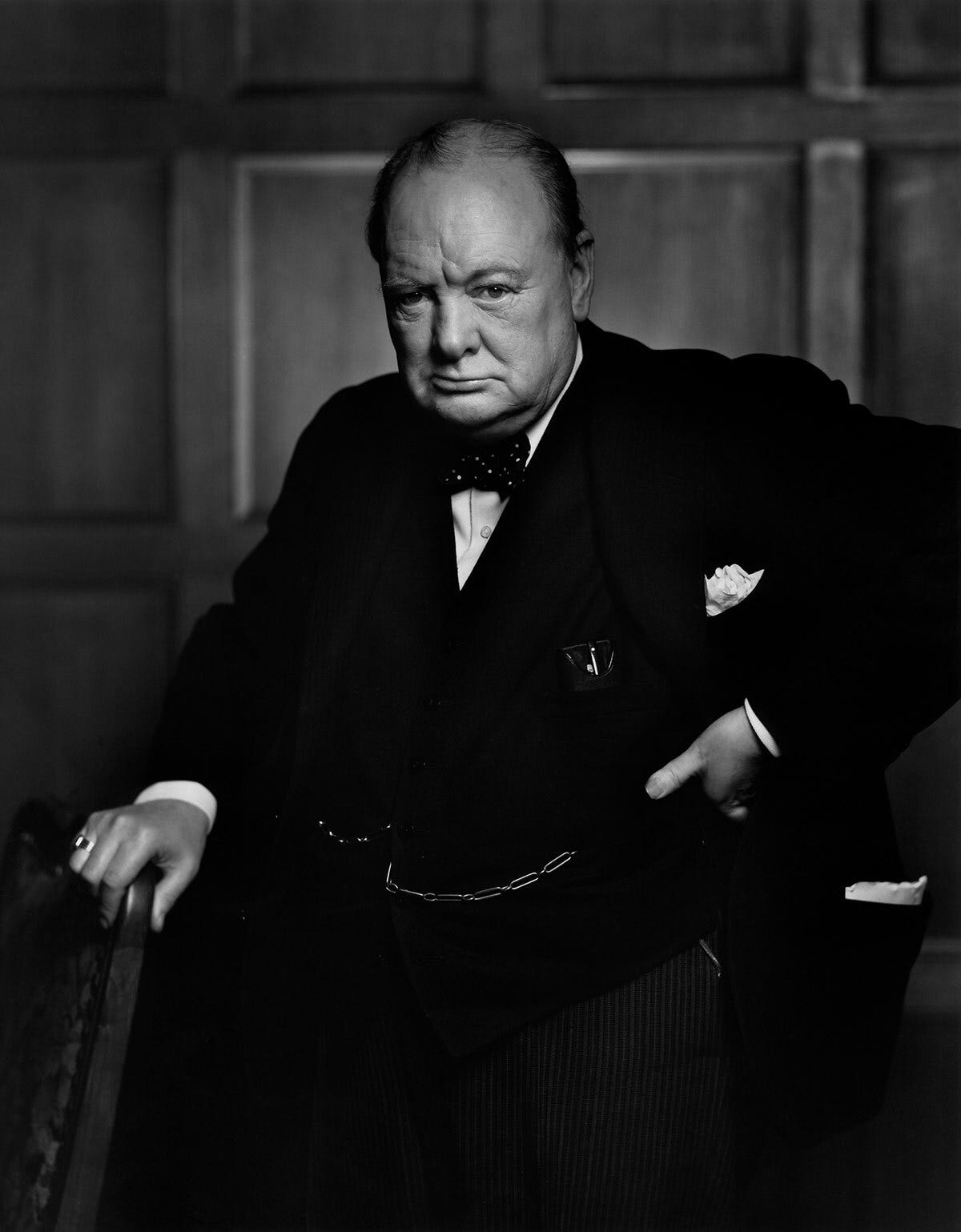
Things weren’t always this way. Statesmen like Winston Churchill used to scowl out from their official portraits, the depth of their frown a signal of their seriousness as a politician. Nowadays a smile is mandatory - even when, as in poor Gordon Brown’s case, the resulting ginned-up grin flatters to deceive.
It’s the result of a culture in which ‘positivity’ is valued almost to the exclusion of everything else - and whether or not the positive feels are about the right things. If to be happy is to be successful, not feeling happy, even if momentarily, can come to seem like failure. This brings with it a devaluation of all the other shades of emotion and states of mind - sadness, towering indignation, sheer gormlessness - which make up the human condition.
This can make smiliness a kind of imposition - and for some of us more than others. Researchers have found that women, in particular, are expected to smile more (though we should bear in mind that research of this sort is more likely to be smiled on a universities these days). Women who don’t smile enough may be perceived as angry scolds. In contexts where men and women are more equal, the smile gap closes (hopefully resulting in a lower level of total smiles).
Men also face a lot of pressure to smile these days, as I can attest. But they would be ill-advised to give in to it. Whereas smiling makes women even more popular than men, male smiling is not always well received. One study found that women rated smiley, happy-looking men as the least attractive, with proud, moody-seeming men scoring highest in their estimation.
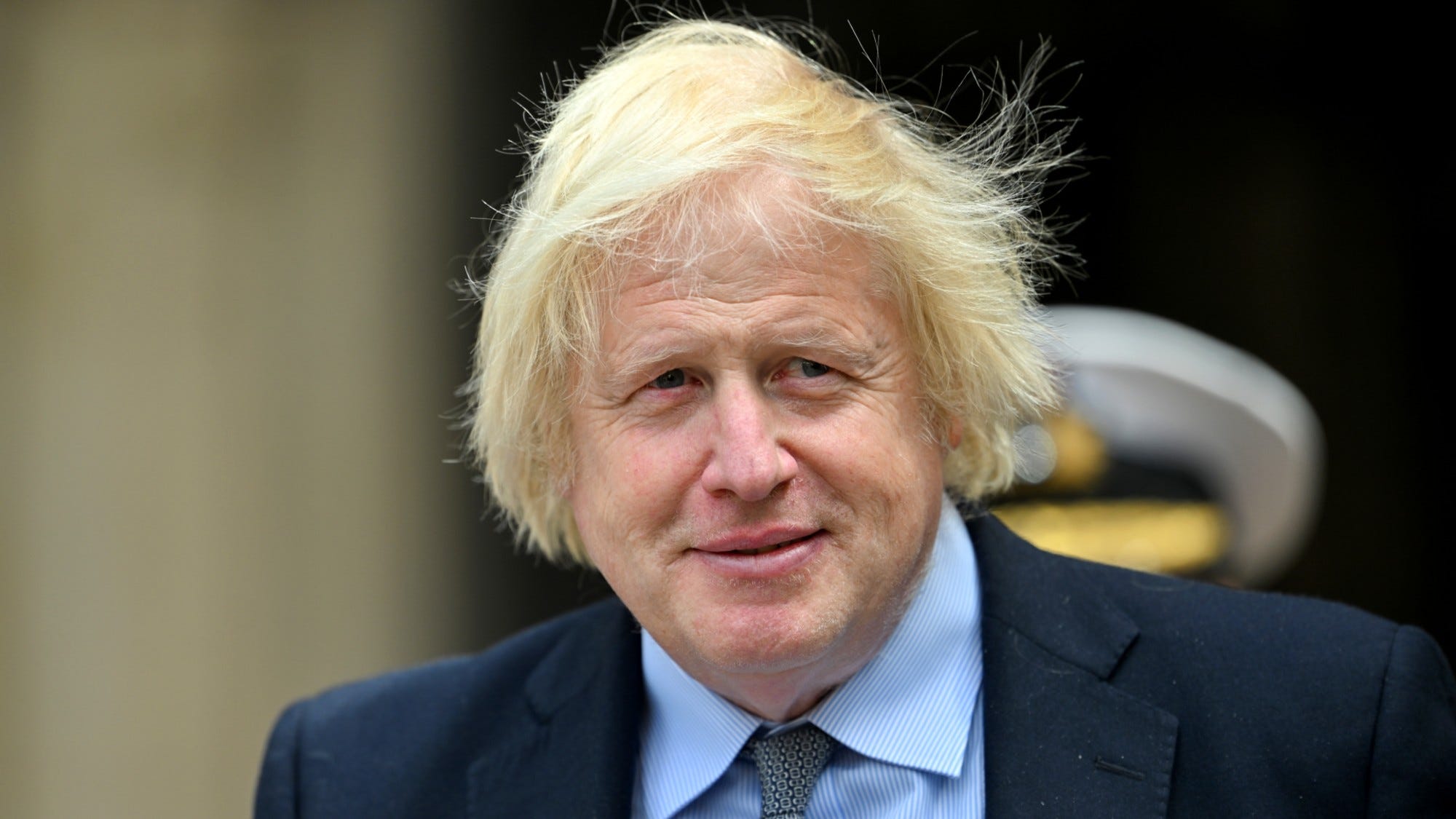
And this is without even going into how, for men, smiling is like drunkenness: it feels great on the inside, but doesn’t always come across as well from an external perspective. Following the 2019 Tory landslide, researchers found that showing Labour-voters images of Boris Johnson smiling ingenuously increased their levels of ‘anger and distress.’ And what men might hope is a winning smile might come across instead as an unwelcome leer. Is that a cheeky or a stupid grin? It’s more in the eye of the beholder than we would like it to be.
Perhaps you will say that I’m not against smiling per se, but fake smiling. The research would suggest that, for men at least, it is precisely the most genuine, unguarded smiles that are the most offensive.
But I take the point: it’s the phoney smiles that most irritate me. And it’s the fake smiles that have led to the excess production of smiles in general, and to the smile inflation we are currently experiencing, with every modest and unassuming expression of contentment being met with ever-more hectoring requests for ‘a real smile.’ Somehow, the tide of inanity has to be turned back.
You might also ask why I’ve targeted smiling in particular. Surely smiling is only the surface of a deeper problem, one that valorizes ‘kindness’ - authentic or inauthentic - at the expense of truth or fairness. This is also true. As I indicated above, it is the cult of ‘positivity’ that is the real downer. But smiliness is the face of the operation, and it is smiliness that most urgently needs to be smashed.
This is a revolution that can start today. The next time someone tells you to smile, scowl at them like you have the defence of Britain during the Blitz on your shoulders. People might not praise you for it in public, but deep down there will be an enormous sense of relief.
Ordinarily I might be tempted, at this stage, to sign off by saying that if this piece has done nothing else, I hope that it has put a smile on your face. But I hope you will understand by now that I sincerely hope that it hasn’t.